Commercial roofing plays a crucial role in protecting business properties, ensuring durability, weather resistance, and energy efficiency. Whether you’re managing a retail space, warehouse, or office building, understanding what commercial roofing is made of helps you make informed decisions for long-term performance and value.
In this article, we’ll break down the most common materials used in commercial roofing, how they function, and what makes them suitable for different types of commercial buildings.
Understanding Commercial Roofing
Commercial roofing refers to the materials and systems used to seal and protect the tops of commercial buildings. These roofs are typically flat or low-sloped and are constructed with materials designed for extended durability, energy savings, and ease of maintenance.
A professional commercial roofing company will typically assess the structure, climate, and usage patterns before recommending the most suitable roofing system. Factors such as energy efficiency, maintenance requirements, and cost all influence the choice of materials.
Common Commercial Roofing Materials
1. TPO (Thermoplastic Olefin)
TPO is one of the most widely used materials in modern commercial roofing. It is a single-ply membrane that combines polypropylene and ethylene-propylene rubber. TPO is appreciated for its reflective surface, which reduces cooling costs in warmer climates.
Benefits:
- UV resistance
- Energy efficiency
- Lightweight and easy to install
- Mold and algae resistance
TPO roofs are typically white or light-colored, which helps reflect sunlight and reduce heat buildup. This makes TPO an ideal choice for energy-conscious building owners.
2. EPDM (Ethylene Propylene Diene Monomer)
EPDM, also known as rubber roofing, is a durable and flexible roofing material with a long history in the commercial roofing industry. It comes in black or white and is installed using adhesives, mechanical fasteners, or ballast.
Benefits:
- Long-lasting (20–30 years)
- Easy to repair and maintain
- Resistant to UV radiation and ozone
- Performs well in cold climates
EPDM is commonly used in areas where extreme weather is a concern. Businesses seeking commercial roofing services in Mooresville often turn to EPDM due to its proven resilience and cost-effectiveness.
3. PVC (Polyvinyl Chloride)
PVC roofing is a single-ply white membrane that offers excellent resistance to chemicals, fire, and water. It is often used in commercial settings such as restaurants, chemical plants, or manufacturing facilities.
Benefits:
- High resistance to chemicals and grease
- Flame-retardant properties
- Low maintenance
- Reflective surface improves energy efficiency
PVC is reinforced with fiberglass or polyester to increase its strength and dimensional stability. Its durability makes it a reliable option for buildings that face environmental or industrial stressors.
4. Modified Bitumen
Modified Bitumen is an asphalt-based roofing system reinforced with modifiers such as fiberglass or polyester. It is commonly applied in multiple layers using torch-applied or cold adhesive techniques.
Benefits:
- Excellent waterproofing
- Resistant to foot traffic
- Strong puncture resistance
- Affordable and time-tested
Modified bitumen is known for its flexibility and ability to expand and contract with temperature changes, making it suitable for varying climates.
5. Built-Up Roofing (BUR)
Built-Up Roofing is one of the oldest commercial roofing systems. It consists of alternating layers of bitumen and reinforcing fabrics, topped with gravel or a reflective coating.
Benefits:
- Proven durability
- Excellent insulation and waterproofing
- Withstands harsh weather
- Cost-effective over time
BUR systems are heavy and require strong structural support. However, they are valued for their long-term performance and ability to withstand high foot traffic.
6. Metal Roofing
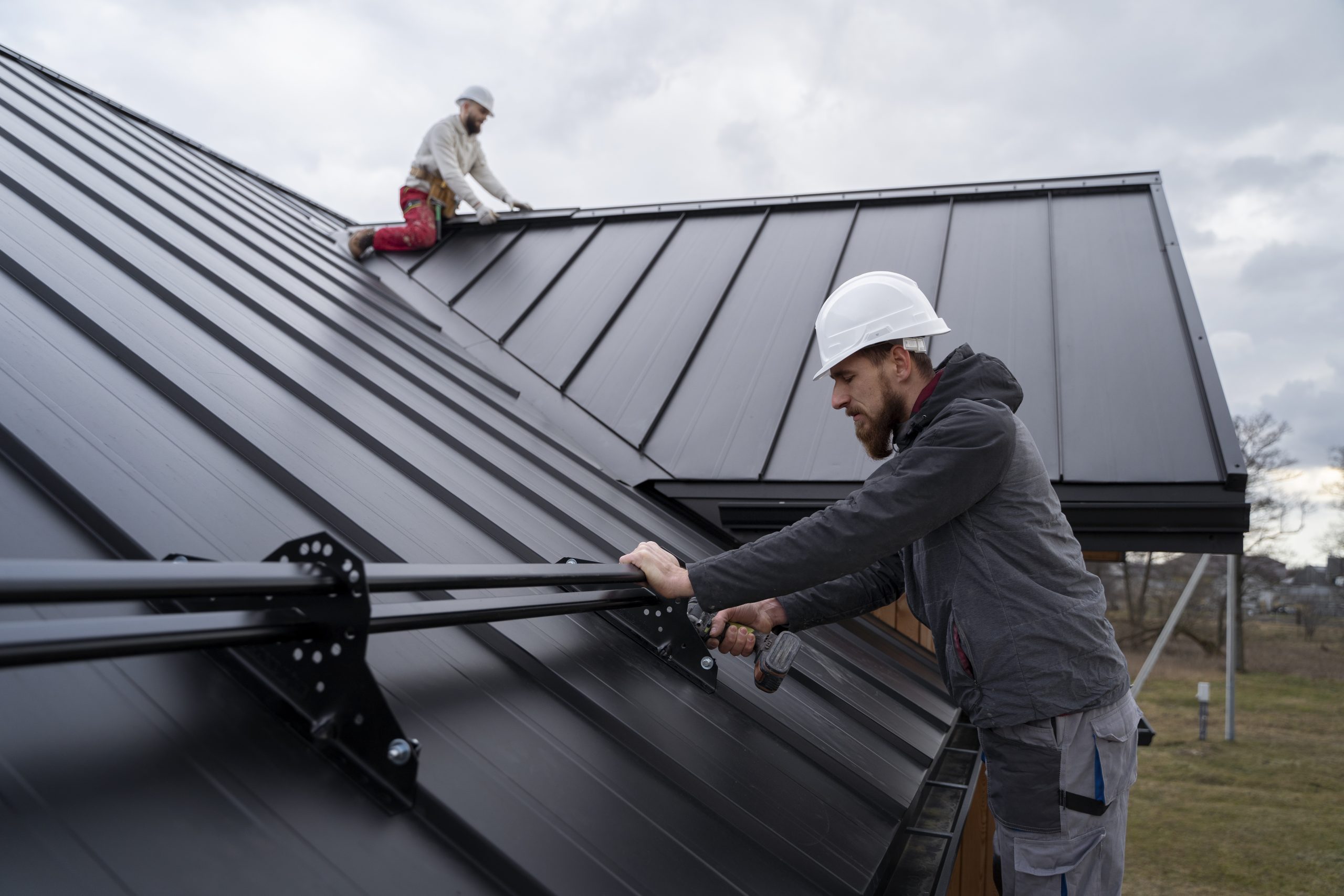
Metal roofing is becoming increasingly popular for commercial buildings due to its durability and modern appearance. Common materials include aluminum, galvanized steel, copper, and zinc.
Benefits:
- Lifespan of 40+ years
- Low maintenance
- Fire and weather-resistant
- Recyclable and eco-friendly
Metal roofs can be installed as panels or shingles and are often coated with protective finishes to improve longevity and energy efficiency. They are an excellent option for buildings seeking both aesthetics and performance.
Choosing the Right Commercial Roofing Material
The choice of roofing material depends on multiple factors:
- Climate: Hot or cold temperatures, frequent storms, or high humidity can all impact material performance.
- Building Usage: Roofs exposed to heavy equipment, foot traffic, or chemicals need more durable materials.
- Energy Goals: Reflective and insulated systems help reduce heating and cooling costs.
- Budget: Installation costs, lifespan, and maintenance expenses should all be considered.
For those seeking commercial roofing services in Mooresville, working with a local contractor ensures compliance with regional codes and climate-specific recommendations. A reliable commercial roofing company will assess these variables before suggesting the most suitable system.
Environmental Considerations
Many commercial roofing materials are now manufactured with sustainability in mind. TPO, PVC, and metal roofing systems are often recyclable, while green roofs and cool roofs are gaining traction in urban developments.
Choosing environmentally responsible materials can reduce your building’s carbon footprint and may qualify your property for tax incentives or LEED certification.
Maintenance and Longevity
No matter the material, regular maintenance is key to maximizing the lifespan of any commercial roofing system. Scheduled inspections help detect and address minor issues before they escalate into costly repairs.
Commercial roofs should be inspected at least twice a year and after major weather events. Engaging a commercial roofing company for routine maintenance ensures continued protection and optimal performance.
FAQs
1. Which commercial roofing material lasts the longest?
Metal roofing has one of the longest lifespans, often exceeding 40 years with proper maintenance.
2. Is TPO better than EPDM for commercial roofs?
TPO offers better energy efficiency due to its reflective surface, while EPDM is better suited for colder climates and is easier to repair.
3. What is the most affordable commercial roofing option?
EPDM and TPO are among the most budget-friendly materials, offering a balance of cost, durability, and ease of installation.
4. How often should a commercial roof be inspected?
Twice a year is the standard recommendation—once in the spring and again in the fall. Additional inspections should be conducted after severe storms.
5. Can commercial roofing materials be recycled?
Yes. Many materials like metal, TPO, and PVC are recyclable, helping reduce landfill waste and support sustainable building practices.
Conclusion
Understanding what commercial roofing is made of allows business owners to make smarter investments in their properties. With a wide range of materials like TPO, EPDM, PVC, modified bitumen, BUR, and metal, each option has its strengths depending on your building’s specific needs.
Working with an experienced commercial roofing company can help you choose a system that balances performance, cost, and sustainability. For those in North Carolina, engaging trusted professionals offering commercial roofing services in Mooresville ensures your roof is built to last and optimized for local conditions.